

How To Use Windows Installation Media
At the fourth dimension of installing a fresh re-create of Windows 10, you typically use a USB flash drive to launch the "Windows Setup" wizard to proceed with the installation process. However, if you have a device that has a Unified Extensible Firmware Interface (UEFI), instead of the legacy Basic Input/Output Arrangement (BIOS), information technology is crucial to use the correct media for the firmware type to consummate the installation successfully.
On Windows 10, you can use at least two tools to create a USB bootable media. Y'all tin can use the Microsoft Media Creation Tool to download the files onto a removable storage with support for both firmware types (UEFI and legacy BIOS). Or you can apply Rufus, a third-political party tool that makes information technology easy to create a flash drive to install Windows with back up for UEFI.
In this Windows 10 guide, nosotros will walk you through the steps of creating a USB wink drive that includes back up for UEFI using the Microsoft Media Creation Tool and Rufus.
- How to create Windows 10 UEFI boot media with Media Creation Tool
- How to create Windows ten UEFI kick media with Rufus
How to create Windows 10 UEFI boot media with Media Creation Tool
On Windows ten, the Media Creation Tool is the choice available for creating a bootable USB media to perform an in-place upgrade or clean installation.
To create a Windows 10 USB media, connect a wink drive of at to the lowest degree 8GB of infinite, and and then utilise these steps:
- Open the Windows 10 download folio.
-
Under the "Create Windows 10 installation media" department, click the Download tool now push button to save the file.
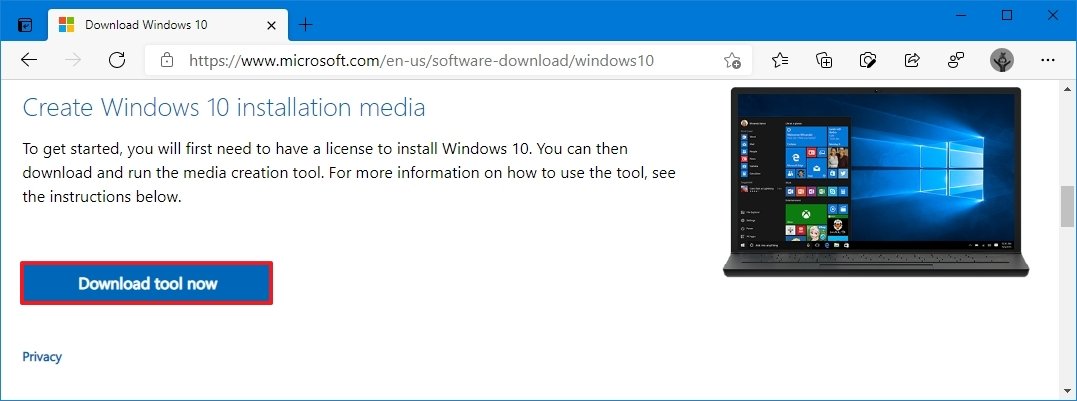 Source: Windows Central
 - Double-click the MediaCreationToolxxxx.exe file to launch the setup.
- Click the Accept button to agree to the applicable license terms.
-
Select the Create installation media (USB flash drive, DVD, or ISO file) for another PC option.
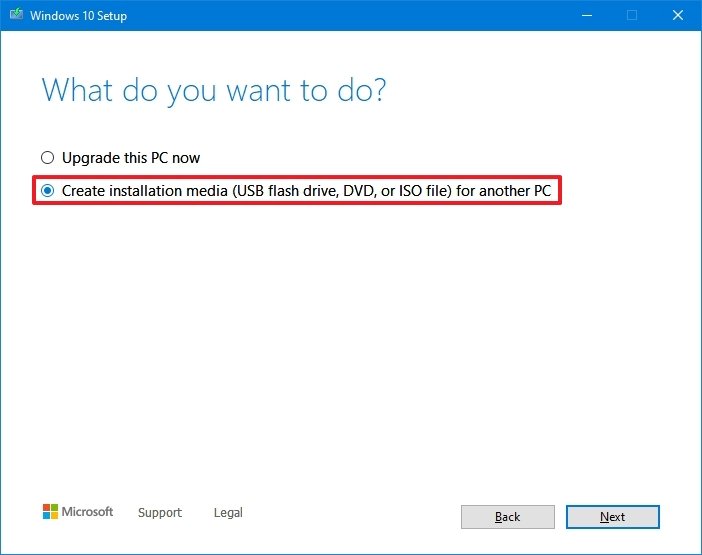 Source: Windows Fundamental
 - Click the Next button.
-
(Optional) Clear the Use the recommended options for this PC choice.
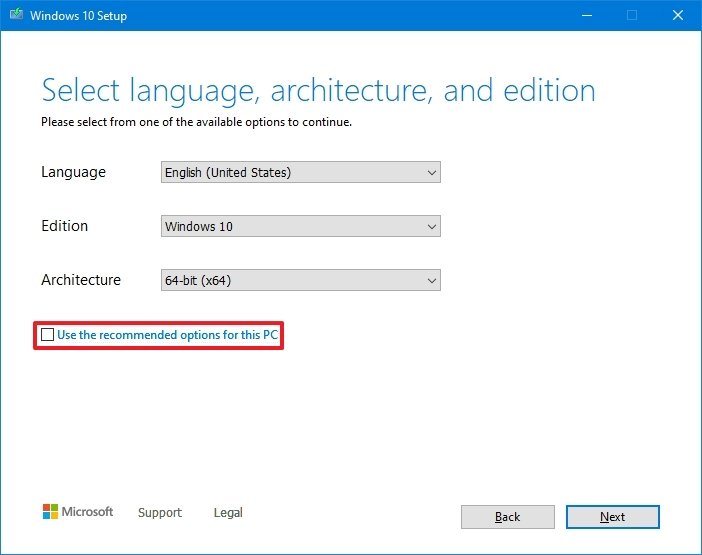 Source: Windows Fundamental
 -
Select the correct language, architecture, and edition of Windows 10 (if applicable).
Quick tip: If you programme to install Windows on multiple computers running 32-bit and 64-bit architectures, use the "Compages" driblet-down carte and select the Both option to create a media that will work on both systems.
- Click the Next push button.
-
Select the USB wink drive option.
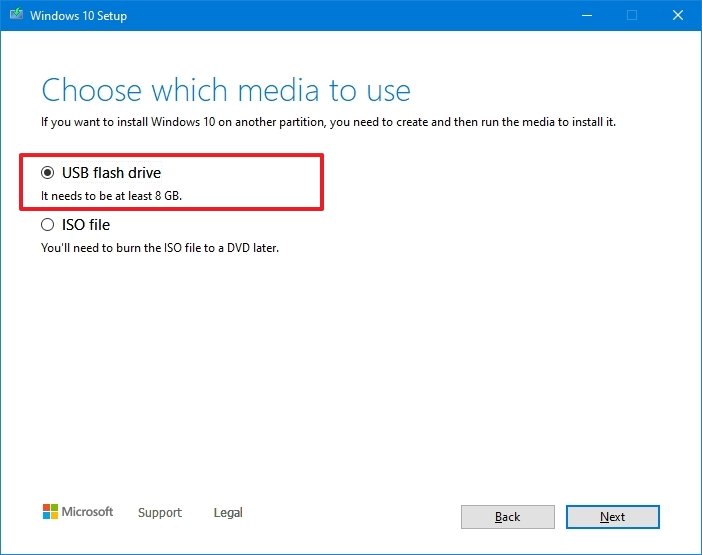 Source: Windows Primal
 - Click the Next button
-
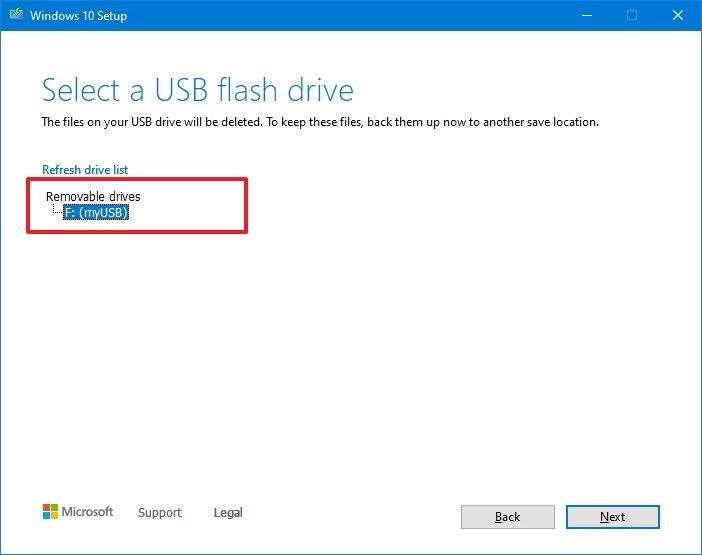
Select the wink drive from the list. (If yous do not see the device, click the Refresh bulldoze list choice.)
 Source: Windows Fundamental
 - Click the Adjacent push.
- Click the Stop button.


In one case y'all complete the steps, the Media Cosmos Tool volition download the files and will create a bootable USB flash bulldoze that you can use to install Windows 10 on computers with support for UEFI and BIOS.

1. ExpressVPN: The best VPN available right now
This is our acme option for anyone looking to get started with a VPN. It offers a not bad mix of speed, reliability, outstanding customer service, and affordability. In that location is a xxx-day money-back guarantee, so give information technology a shot today.
From $vi.67 per month at ExpressVPN
How to create Windows ten UEFI kick media with Rufus
If the Media Creation Tool does non work or you practise not want to use it, then yous can try Rufus, a popular gratuitous tertiary-party tool that allows you to create an installation media with support for UEFI devices. The utility offers two means to make the installation media, including using an existing ISO file or downloading the image from the Microsoft servers directly from the app.
Create install wink bulldoze with Windows 10 ISO
To create a USB media with an existing Windows 10 ISO file, connect a flash drive of at least 8GB of space, and apply these steps:
- Open Rufus download page.
-
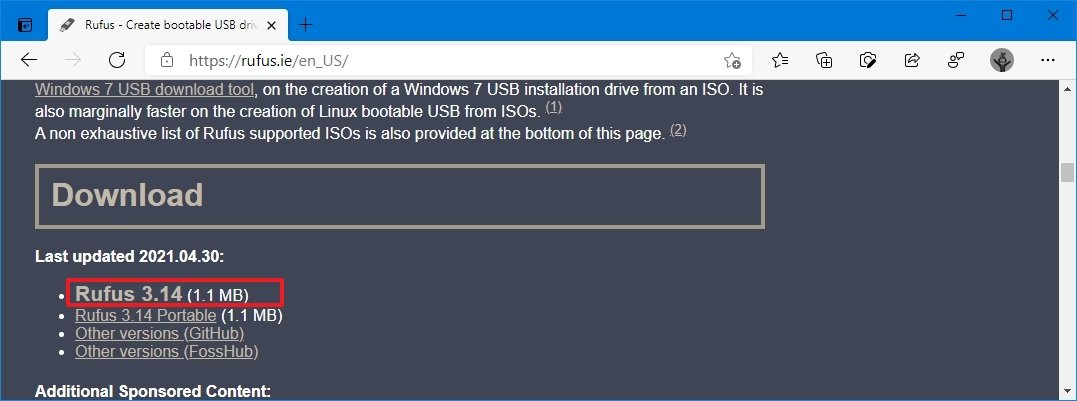
Under the "Download" section, click the latest release (offset link) and salve the file.
 Source: Windows Primal
 - Double-click the Rufus-x.xx.exe file to launch the tool.
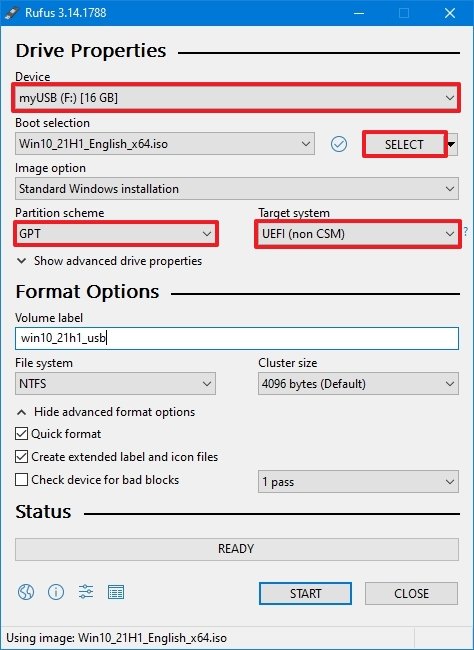
- Under the "Device" department, select the USB flash drive.
- Under the "Boot selection" section, click the Select button on the right side.
- Select the Windows ten ISO file from the binder location.
- Click the Open push button.
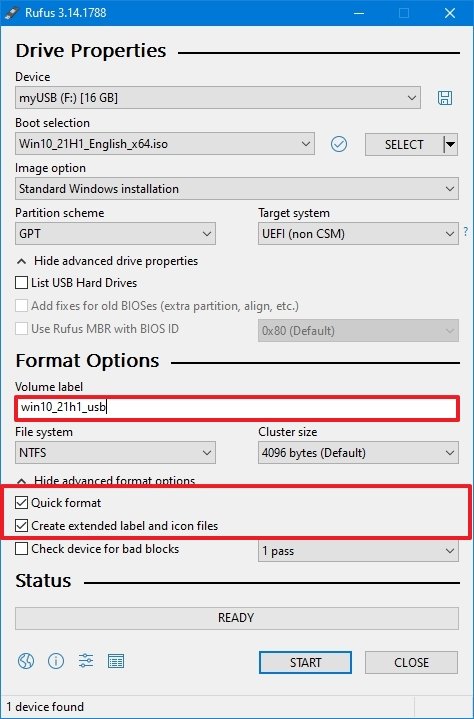
- Use the "Image option" drop-downwards menu and select the Standard Windows installation selection.
- Utilise the "Partition scheme" drib-downwards menu and select the GPT option.
-
Use the "Target system" drop-down menu and select the UEFI (not CSM) pick.
 Source: Windows Key
 -
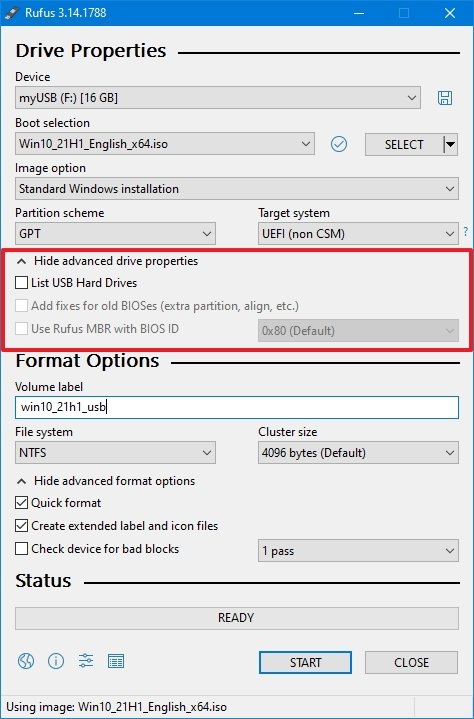
Under the "Testify Avant-garde drive backdrop" section practise not change the default settings (unless you know what y'all are doing).
 Source: Windows Central
 -
Under the "Volume characterization" field, confirm a proper noun for the drive — for instance, "win10_21h1_usb."
 Source: Windows Primal
 - In the "File organization" and "Cluster size" options do non alter the default settings.
- Click the Show avant-garde format options button.
- Check the Quick format pick.
- Check the Create extended label and icon files choice.
- Click the Start push.
- Click the OK button to confirm.
- Click the Close push button.


After you complete the steps, Rufus will create a USB flash bulldoze to install Windows 10 on a device using UEFI.
Create boot flash drive downloading Windows 10 ISO
The tool also has a feature to download the Windows 10 ISO file, which yous tin then use to create a USB flash drive to install Windows 10.
To create an install media with UEFI support with Rufus, use these steps:
- Open Rufus download folio.
-
Under the "Download" section, click the latest release (kickoff link) of the tool to save the file.
Source: Windows Cardinal - Double-click the Rufus-x.xx.exe file to launch the tool.
-
Click the Settings button at the bottom of the page.
 Source: Windows Key
 -
Under the "Settings" section, use the "Cheque for updates" drop-down menu and select the Daily option.
 Source: Windows Central
 - Click the Close button.
- Close the Rufus tool.
- Double-click the Rufus-x.xx.exe file to reopen the utility.
- Under the "Device" section, select the USB flash drive from the listing.
-
Under the "Kick choice" section, click the arrow push button adjacent to the "Select" option and choose the Download option.
 Source: Windows Fundamental
 - Click the Download button.
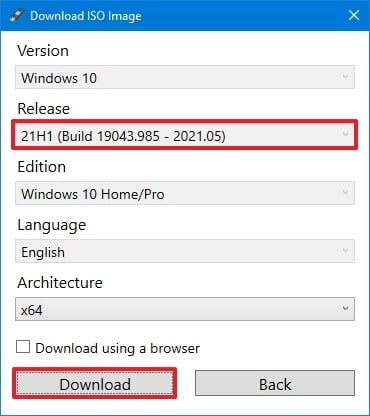
- Utilize the "Version" drib-downward menu and select the Windows 10 option.
- Click the Continue push.
- Select the 21H1 (Build 19043.xxx - xxxx.twenty) option to download the Windows x May 2022 Update.
- Click the Continue push button.
- Utilize the "Edition" drib-down carte and select the Windows 10 Home/Pro pick.
- Click the Go along push.
-
Utilise the "Language" drop-down card and select your installation language.
Quick notation: If you lot are located in the United States, select the "English" option. Otherwise, select the "English International" choice or the language that applies to you.
- Click the Proceed button.
-
Use the "Architecture" drop-downward menu and select the 32-bit or 64-scrap option (recommended).
Quick tip: You tin can bank check the architecture of your reckoner on Settings > Organisation > About, and under the Device specifications department, confirm whether the "Organization blazon" is 64-bit or 32-flake.
-
Click the Download push button.
 Source: Windows Fundamental
 - Select a folder to save the ISO file.
- Click the Salve push.
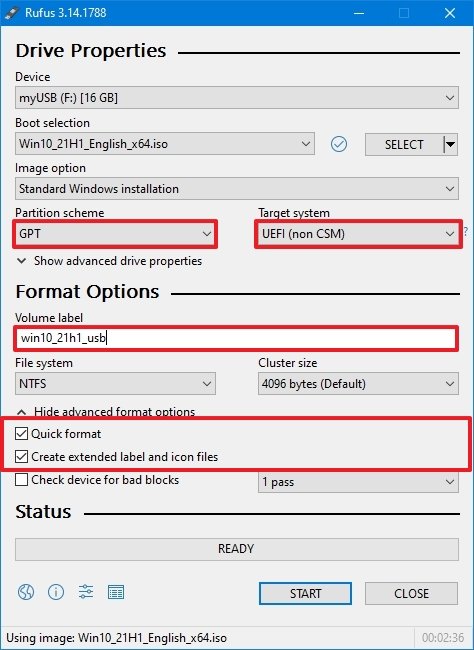
- Utilize the "Image option" drop-down menu and select the Standard Windows installation pick.
- Utilize the "Partitioning scheme" drop-downward bill of fare and select the GPT selection.
-
Employ the "Target system" drib-downward menu and select the UEFI (non CSM) option.
 Source: Windows Cardinal
 - Under the "Evidence Advanced bulldoze backdrop" department, exercise not change the default settings.
- Under the "Volume label" field, confirm a proper noun for the bootable drive — for example, "win10_21h1_usb."
- Nether the "File organisation" and "Cluster size" sections, do not change the default settings.
- Click the Show advanced format options push.
- Bank check the Quick format choice.
- Cheque the Create extended label and icon files option.
- Click the Start push button.
- Click the OK button.
- Click the Close push button.


Once you complete the steps, Rufus will run the automated script to download the Windows 10 ISO file from the Microsoft servers. So you lot tin can use the tool to create a bootable media to install Windows 10 on a UEFI device without the need for the Media Cosmos Tool.
When you have the USB boot media with support for UEFI systems, you tin use it to launch the "Windows Setup" wizard to perform a clean installation of Windows ten or an in-place upgrade. However, since the "UEFI:NTFS bootloader" does not include a digital signature for secure boot, you must temporarily disable secure boot on the motherboard firmware before yous tin boot into the setup. Typically, you would complete this task from within the Unified Extensible Firmware Interface, which you can admission by hitting one of the function keys (F1, F2, F3, F10, or F12), Esc, or delete key as presently as you lot start the computer.
The firmware settings are unlike per manufacturer and even by device model. Equally a effect, make sure to cheque your device manufacturer's support website for more specific instructions. After the installation of Windows 10, you can enable secure boot once again.
More Windows 10 resources
For more helpful articles, coverage, and answers to common questions about Windows 10, visit the following resources:
- Windows 10 on Windows Central — All you need to know
- Windows 10 help, tips, and tricks
- Windows 10 forums on Windows Central
We may earn a commission for purchases using our links. Acquire more.

Room to abound
Hither's how Forza Horizon 5 could be even improve
Forza Horizon 5 is one of the best games of 2022, and 1 of the greatest racing games you lot tin can play. Information technology's certainly not perfect, though, with plenty of areas with room for improvement. Here are five things Forza Horizon v could practise ameliorate.

Source: https://www.windowscentral.com/how-create-windows-10-usb-bootable-media-uefi-support
Posted by: thaxtonationvin.blogspot.com
0 Response to "How To Use Windows Installation Media"
Post a Comment